
Stuck in an annuity? Get the free guide.
A Consumer’s Guide to Annuity Contracts shows what it really costs to get out, when that cost drops, and every option you have. Including staying put.
- What it really costs to get out, year by year
- The date your surrender charge hits zero
- The “benefit base” that isn’t your money
- 7 red flags in how annuities are sold
- 8 ways out, including penalty-free options
- A worksheet to size up your own contract
Five sections. Two pages to print.
Written in plain language by a law firm that has nothing to sell you. Every figure comes from a regulator, and every page ends with where to get help.
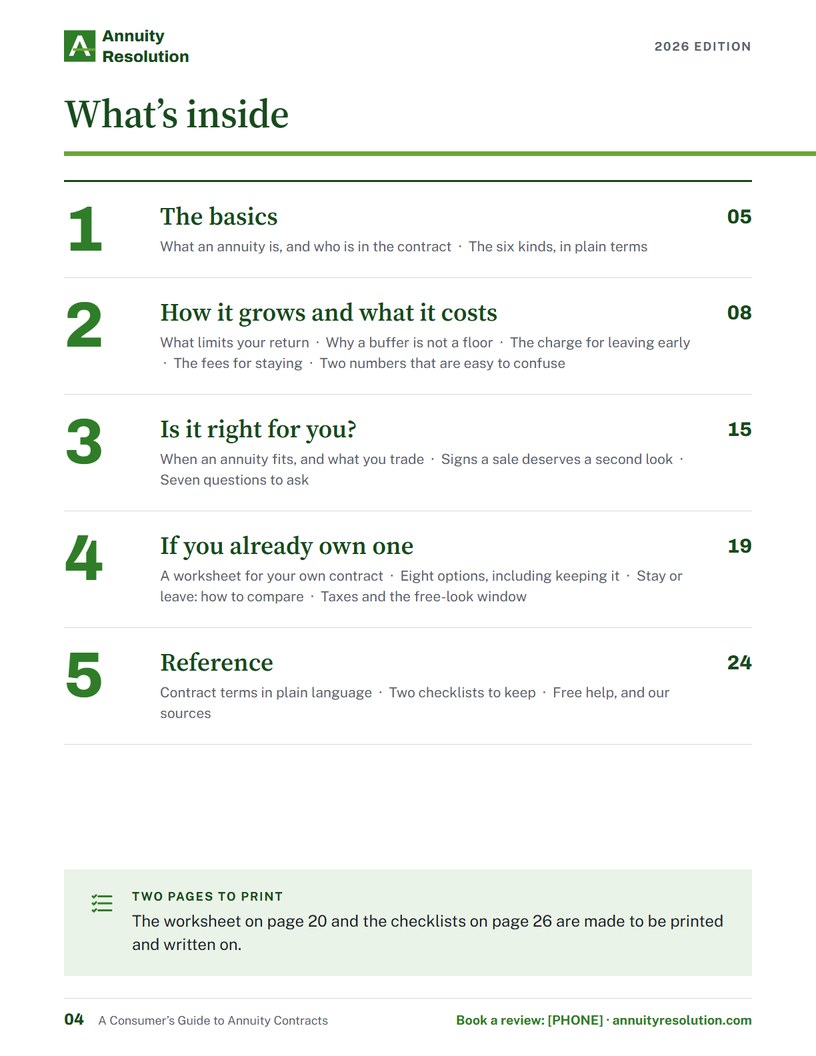
- 05
The basics
What an annuity is, and who is in the contract · The six kinds, in plain terms
- 08
How it grows and what it costs
What limits your return · Why a buffer is not a floor · The charge for leaving early · The fees for staying
- 15
Is it right for you?
When an annuity fits, and what you trade · Signs a sale deserves a second look · Seven questions to ask
- 19
If you already own one
A worksheet for your own contract · Eight options, including keeping it · Stay or leave: how to compare · Taxes and the free-look window
- 24
Reference
Contract terms in plain language · Two checklists to keep · Free help, and our sources
Real pages from the guide
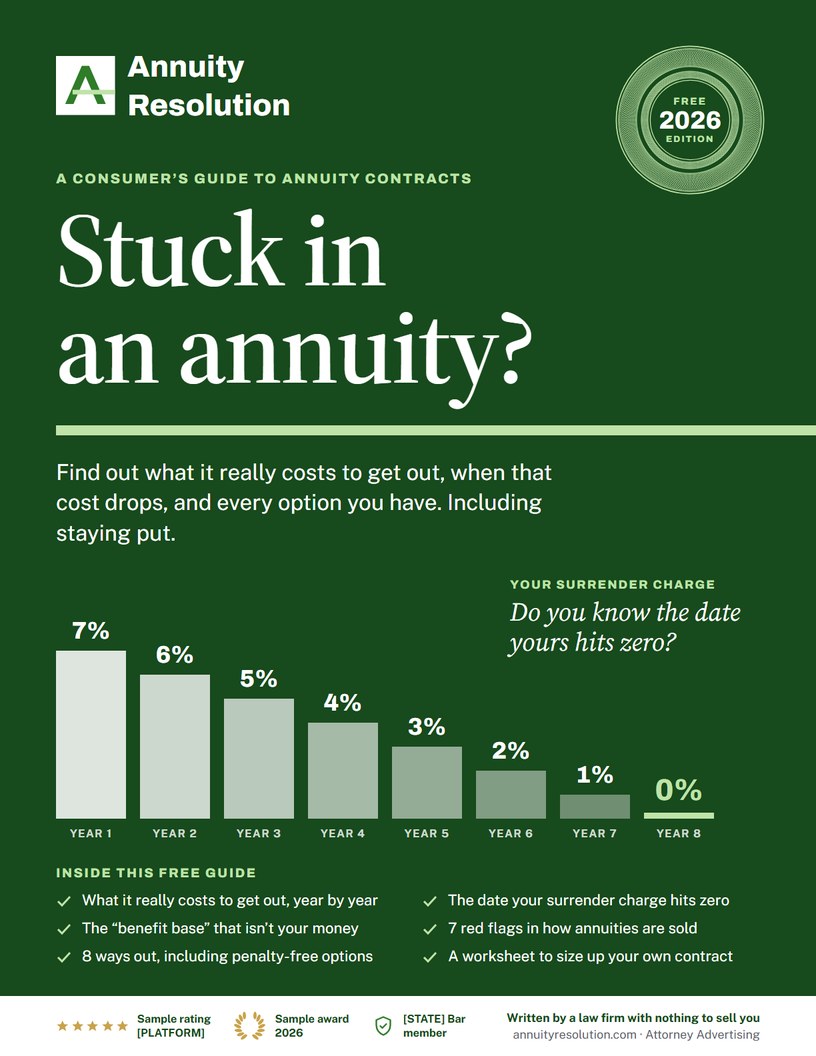
Do you know the date yours hits zero?
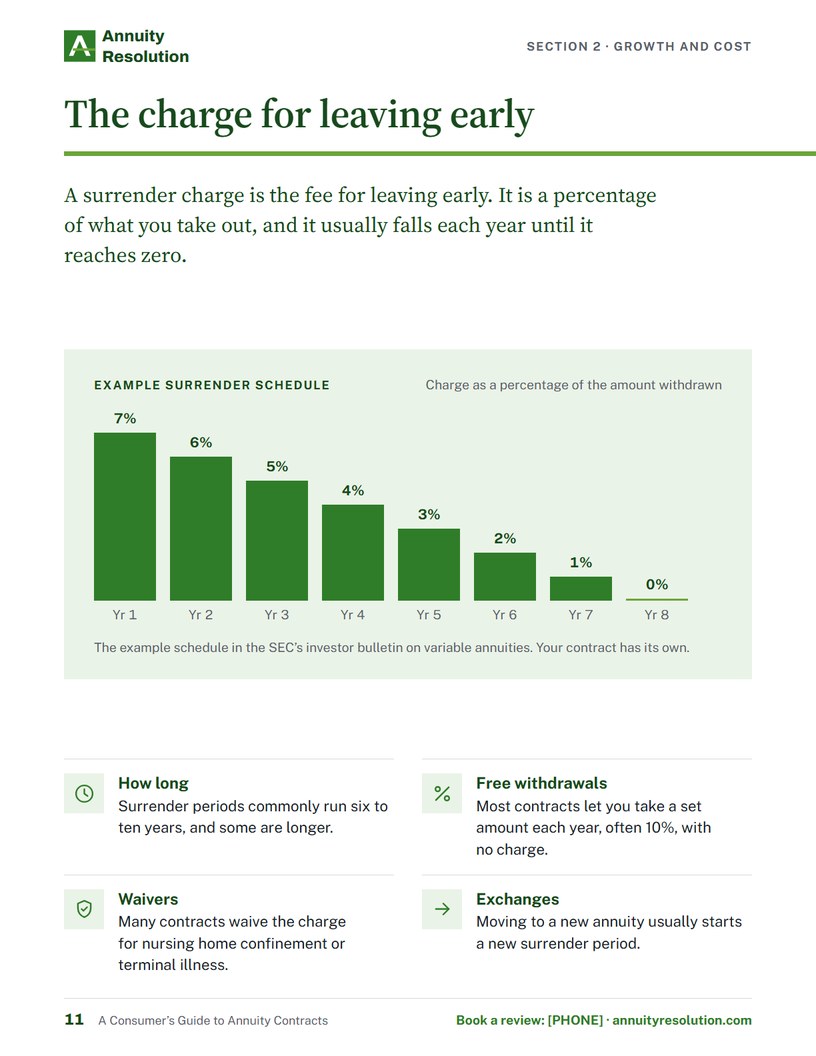
Most annuities charge a fee for leaving early, and it usually falls each year until it reaches zero. The guide shows you how to find your own schedule, and what to do with it.
Example schedule from the SEC’s investor bulletin on variable annuities. Your contract has its own.
About the guide
Is the guide really free?
Yes.
Who is it for?
Anyone who owns an annuity, is thinking about buying one, or is helping a parent with one.
Is this investment advice?
No. The guide explains how annuity contracts work. It is not investment advice, and reading it does not make you a client.